Ultrasound and Mammography
In-House Radiology Services
Experience the Convenience and Comfort of Our In-House Ultrasound and Mammography Services At Atrium
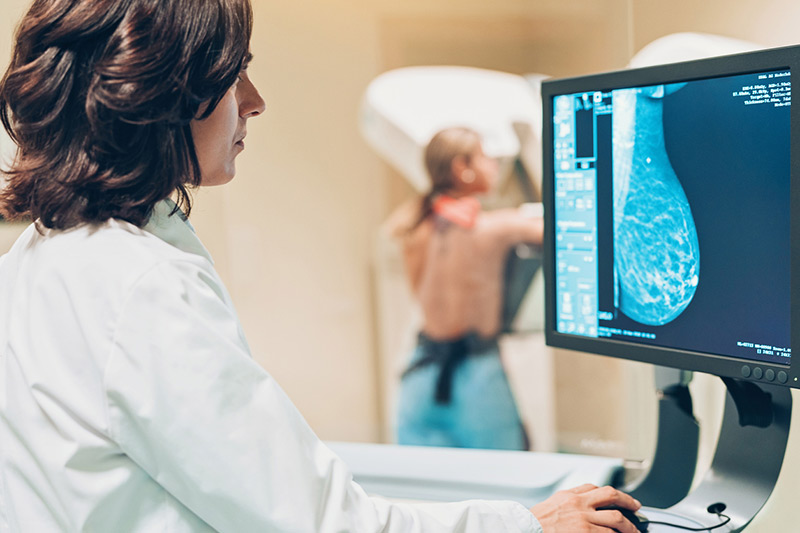
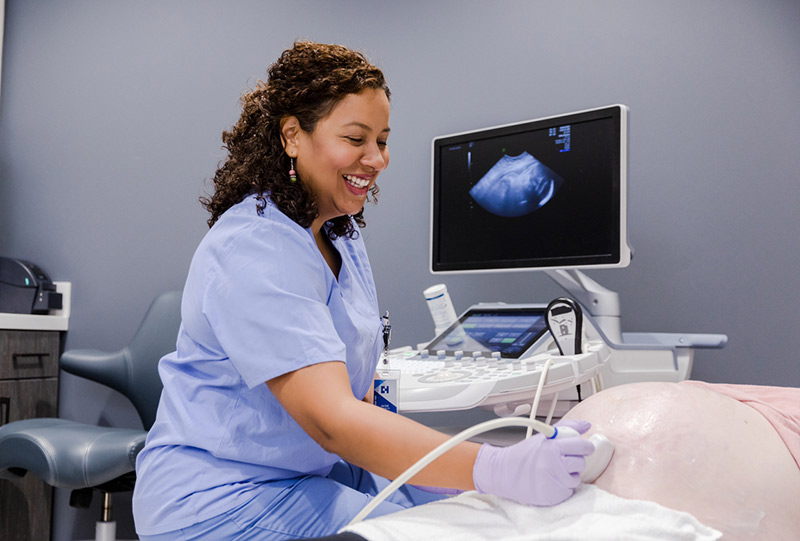
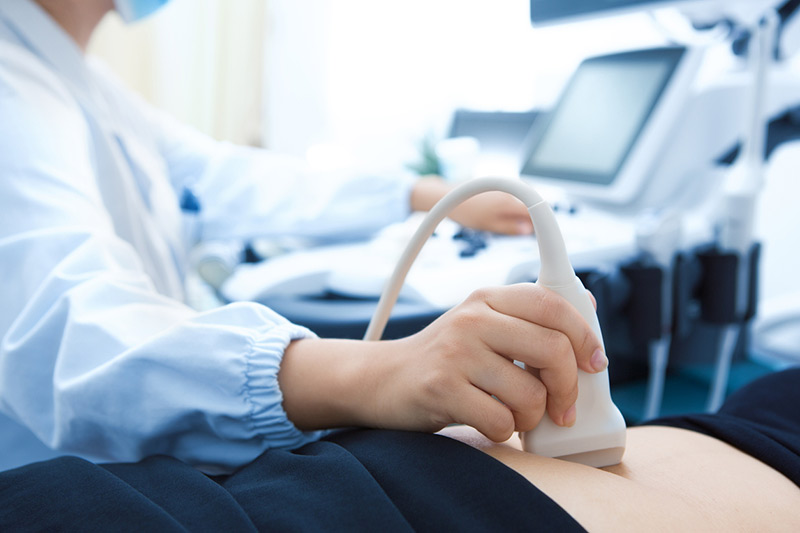
At Atrium, our advanced imaging technology includes fetal ultrasounds, diagnostic ultrasounds for breast, uterus, bladder and ovaries, as well as digital mammograms. We invite you to experience our pleasant surroundings and state-of-the-art equipment.
Atrium Patient Portal
Take advantage of the online services offered by our practice with the assurance that all of your information is encrypted and stored securely.
Mammography FAQs
What is a mammogram?
A mammogram is an x-ray examination of the breasts, used to detect and diagnose breast diseases. Screening mammography is used as a preventive measure for women who have no symptoms of breast disease and usually involves two views of each breast. A diagnostic mammography involves additional views of the breast, and is used when an abnormality is found during a screening, or in women who have breast complaints, such as a breast mass, nipple discharge, breast pain, or skin irritation.
Who should have a mammogram?
The American Cancer Society and American Congress of Obstetricians and Gynecologists recommend that all women have a baseline screening mammogram between the ages of 35 and 40 and that beginning at the age of 40, women have an annual screening mammogram. Mammograms play a central part in the early detection of breast cancer because they can detect changes in the breast that may be early signs of cancer, but are too small or subtle to be felt.
What Should I Know About Breast Cancer?
- One in eight women living in the U.S will be diagnosed with breast cancer in their lifetime.
- Breast cancer is the second leading cause of cancer death in U.S. women. It is the leading cause of death in 35 to 65 year old women.
- Approximately 2.4 million American women with a history of breast cancer are alive today.
Early diagnosis is key
There is no disagreement that early and accurate diagnosis of breast cancer is key to improving clinical outcomes. Mammography – and in particular, digital mammography – is now widely regarded as the gold standard for detecting early breast cancer disease. Mammography may detect cancer one and a half to four years before a cancer becomes clinically evident.
What is a Fast MRI?
How Much Radiation Will I Be Exposed To?
The radiation exposure of 3D mammography is a little more than with 2D mammography. Yet the total dose of the 3D technique is still well within FDA safe limits and much less than the annual exposure everyone receives from natural sources, such as cosmic rays and the soil.
How Much Do You Know About Breast Health?
When it comes to cancer prevention, knowledge is your best friend. When you get down to it, screening for breast cancer can increase your chances of finding the disease earlier. Whether you have implants or not, are nursing or not, or you’re pregnant or not: all women of appropriate screening age need to schedule their annual mammograms. We can help you get started.